 +86-13867573512
 [email protected]
 Get a quote

 English
  Español
Pinion Bearings: Types, Preload, Failure & Replacement Guide
Author: Heyang Date: May 25, 2026
Content
- 1 What Are Pinion Bearings and Why They Matter
- 2 Types of Bearings Used on Pinion Shafts
- 3 Load Analysis: What Forces Act on a Pinion Bearing
- 4 Pinion Bearing Preload: The Critical Setup Dimension
- 5 Lubrication Requirements for Pinion Bearings
- 6 Common Failure Modes of Pinion Bearings
- 7 Noise Diagnosis: How to Tell If a Pinion Bearing Is Failing
- 8 Pinion Bearing Replacement: Step-by-Step Process Overview
- 9 Pinion Bearing Specifications: Key Parameters to Know Before Ordering
- 10 Pinion Bearings in Industrial and Heavy Equipment Applications
- 11 Extending Pinion Bearing Service Life: Practical Recommendations
What Are Pinion Bearings and Why They Matter
Pinion bearings are a category of rolling-element bearings specifically designed to support the pinion shaft in gear-driven assemblies — most commonly in automotive differentials, industrial gearboxes, steering racks, and heavy machinery drive trains. Their primary job is to carry both radial and axial (thrust) loads while allowing the pinion shaft to rotate smoothly at high speed and under significant torque. Without properly functioning pinion bearings, gear mesh alignment deteriorates rapidly, leading to premature gear wear, abnormal noise, heat buildup, and eventual drivetrain failure.
The term "pinion" refers to the smaller of two meshing gears in a gear set. In a rear-wheel-drive vehicle differential, for example, the drive pinion is the shaft that connects to the driveshaft and drives the ring gear. The bearings that support this shaft — typically a pair of tapered roller bearings — must handle enormous forces transmitted through every acceleration, deceleration, and cornering event. In industrial applications, the forces can be far greater: a single stage of a large mining mill gearbox may transmit several megawatts of power through the pinion shaft, and bearing failure in that context means costly unplanned downtime.
Understanding pinion bearings — their types, load ratings, preload requirements, lubrication demands, failure modes, and replacement procedures — is essential knowledge for automotive technicians, mechanical engineers, and maintenance professionals. The following sections break down each of these topics in practical detail.
Types of Bearings Used on Pinion Shafts
Not all bearing types are equally suited for pinion shaft applications. The geometry of the pinion, the direction of the loads, and the operating speed all influence which bearing design is most appropriate. The four types most commonly encountered in pinion positions are listed below.
Tapered Roller Bearings
Tapered roller bearings are by far the most widely used bearing type in automotive differential pinion applications. Their conical geometry allows them to carry large radial loads and substantial axial (thrust) loads simultaneously — a combination that straight roller or deep-groove ball bearings cannot match at similar sizes. In a typical rear axle differential, the front (pilot) pinion bearing is a larger tapered roller unit that absorbs most of the axial thrust from the hypoid gear mesh, while the rear pinion bearing is a smaller tapered roller unit that stabilizes the shaft radially. The contact angle of tapered roller bearings used in pinion positions typically ranges from 10° to 29°, with higher angles providing greater thrust capacity at the cost of reduced radial capacity.
One critical characteristic of tapered roller bearings is that they must be set with a specific preload or end-play to perform correctly. Improper adjustment — too loose or too tight — leads directly to bearing noise, overheating, and shortened service life. This makes installation technique as important as bearing quality itself.
Angular Contact Ball Bearings
Angular contact ball bearings are preferred in high-speed pinion applications where rotational speed exceeds the practical limit of tapered roller bearings. They handle both radial and axial loads through the angular contact of the ball against the races, and their lower friction makes them suitable for spindles and high-speed gearboxes. Machine tool spindles and some electric vehicle motor-gearbox assemblies use angular contact bearings on the pinion shaft precisely because they combine reasonable load capacity with the ability to operate at tens of thousands of RPM. These bearings are almost always installed in matched pairs — either face-to-face (DF) or back-to-back (DB) — to handle bidirectional thrust loads.
Cylindrical Roller Bearings
In large industrial gearboxes where radial loads dominate and axial loads are handled separately by a dedicated thrust bearing, cylindrical roller bearings are often placed on the pinion shaft. Their line contact between rollers and raceway gives them excellent radial load capacity and stiffness, making them suitable for heavy-duty mill drives, wind turbine gearboxes, and rolling mill applications. However, standard cylindrical roller bearings cannot carry axial loads, so they must always be paired with a separate thrust-carrying element when axial forces are present.
Needle Roller Bearings
Needle roller bearings appear in compact pinion applications where radial space is severely constrained, such as in steering rack-and-pinion assemblies, transmission countershafts, and small gearheads. Their high length-to-diameter ratio rollers give them impressive radial load capacity relative to their cross-section. Because they are sensitive to misalignment and have poor thrust capacity, needle roller bearings on pinion positions are typically backed by a washer or thrust bearing to handle any axial component.
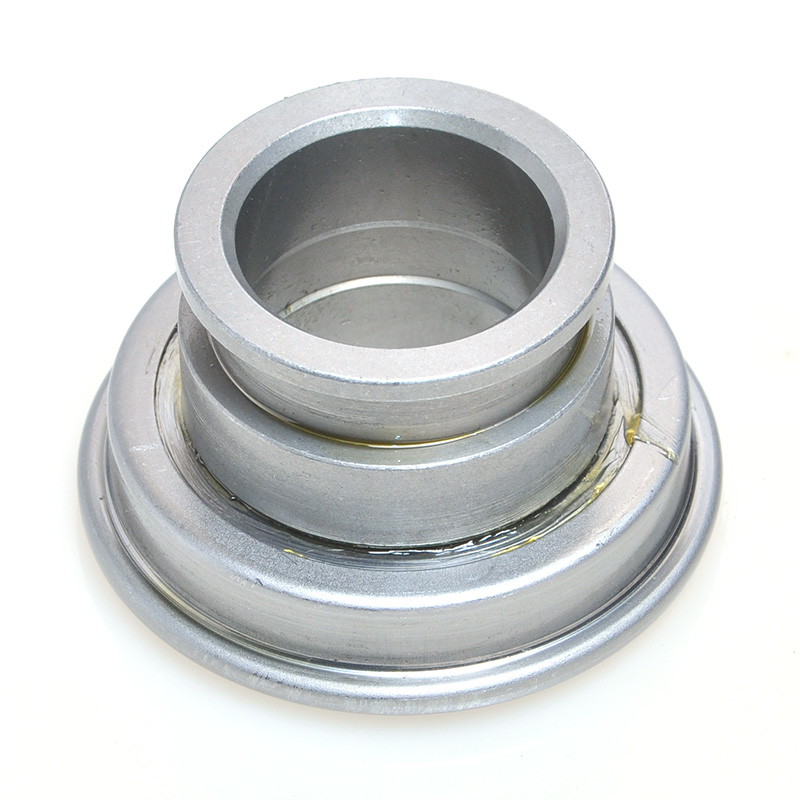
Load Analysis: What Forces Act on a Pinion Bearing
Selecting the right pinion bearing begins with understanding the nature of the loads it must carry. Three distinct force components act on a pinion shaft bearing:
- Radial load — the force acting perpendicular to the shaft axis, primarily generated by the gear mesh forces and shaft weight. In a heavily loaded differential, radial forces on the front pinion bearing can reach several thousand newtons.
- Axial (thrust) load — the force acting parallel to the shaft axis, caused by the helical or hypoid gear tooth geometry. Hypoid gears, used in most modern automotive differentials, generate substantial thrust loads because of the offset between the pinion and ring gear axes. This thrust must be absorbed entirely by the pinion bearings.
- Moment (bending) load — the bending moment created by the offset gear mesh force relative to the bearing support points. In overhung pinion configurations, where the gear is located outside the bearing span, this bending moment can be substantial and must be considered in bearing selection.
The equivalent dynamic bearing load, used for calculating bearing life, combines these components using a formula specified by the bearing manufacturer — typically following ISO 281. For automotive differential pinion bearings, the calculated L10 life (the life at which 90% of a bearing population is expected to survive) is typically designed to exceed 150,000 miles under normal operating conditions. Heavy-duty truck differentials may specify even longer design lives of 500,000 miles or more.
Beyond static load analysis, dynamic load variations caused by shock loads, gear backlash, and torsional vibrations must also be factored in using application-specific load multipliers. Ignoring these dynamic effects is a common reason why bearings fail significantly before their calculated design life.
Pinion Bearing Preload: The Critical Setup Dimension
Preload is the condition in which the bearing is assembled with a slight internal compressive force — the rollers are pressed against both races without any free play. For tapered roller bearings used on pinion shafts, preload is not optional; it is a fundamental requirement for correct operation. Too little preload allows the pinion shaft to deflect and oscillate under load, causing gear noise and accelerating tooth wear. Too much preload generates excessive heat, causes lubricant breakdown, and dramatically shortens bearing life.
Preload on automotive differential pinion bearings is measured and set using pinion rotating torque — the amount of torque required to turn the pinion shaft by hand with no ring gear installed and the seal lip drag isolated. Manufacturer specifications for new bearings typically call for a pinion rotating torque of:
- New bearings (new crush sleeve): 16–29 in-lb (1.8–3.3 N·m) for most passenger car differentials
- Reused bearings (no crush sleeve): 8–14 in-lb (0.9–1.6 N·m) for most applications, as worn bearing surfaces require less preload
- Heavy-duty truck axles may specify considerably higher values — always consult the OEM service manual
Preload is typically established through one of three methods: a collapsible (crush) sleeve that deforms plastically when the pinion nut is tightened; a solid spacer combined with selective shims measured to achieve the correct stack dimension; or a solid spacer with a nut torqued to a specific value. The crush sleeve method is common on OEM assemblies for its assembly-line simplicity, while the solid spacer-and-shim method is preferred in performance rebuilds because it is adjustable and infinitely re-settable.
One frequently overlooked aspect of preload setting is the effect of bearing seating. New tapered roller bearings must be fully seated on the shaft and in the housing bore before preload is measured. Rotating the pinion several times in each direction while the nut is snug — but before final torque — ensures the rollers seat properly in the races. Failure to seat the bearings before measuring rotating torque results in an inaccurately low reading and a final assembly that is under-preloaded once the bearings bed in.
Lubrication Requirements for Pinion Bearings
Pinion bearings in automotive differentials are lubricated by the same gear oil that lubricates the ring and pinion gears — there is no separate bearing lubrication system. This means the bearing must perform reliably across the full viscosity range of the gear oil, from cold start at temperatures as low as -40°C (where gear oil can be extremely viscous) to operating temperatures that may exceed 120°C in severe-duty towing or off-road conditions.
Gear oil viscosity grade selection directly affects bearing performance. Using too heavy a gear oil (e.g., 140W in a differential specifying 75W-90) increases churning losses, raises operating temperature, and can increase bearing wear during cold starts when the oil is slow to circulate. Using too light an oil risks inadequate film thickness at operating temperature. Most modern passenger car limited-slip and open differentials specify 75W-90 or 75W-140 full-synthetic gear oil, which provides adequate bearing film thickness throughout the temperature range.
Lubrication in Industrial Pinion Bearings
Industrial gearbox pinion bearings operating at high speeds may be lubricated by oil injection (forced circulation) rather than splash lubrication. Forced circulation systems deliver a controlled flow of filtered, temperature-conditioned oil directly to the bearing contact zones, dramatically improving heat removal and contamination control. In large mill drive gearboxes, oil flow rates to pinion bearing positions may be several liters per minute per bearing, and oil temperature is monitored continuously as a condition indicator — a rise in oil temperature above baseline is one of the earliest detectable signs of bearing distress.
Grease lubrication is used in sealed pinion bearing units found in some agricultural equipment, conveyor drives, and compact gearheads. The grease type, consistency grade (NLGI 2 is most common), and relubrication interval must match the bearing's operating speed and temperature. Exceeding the bearing's grease relubrication interval is a primary cause of premature bearing failure in field-maintained equipment.
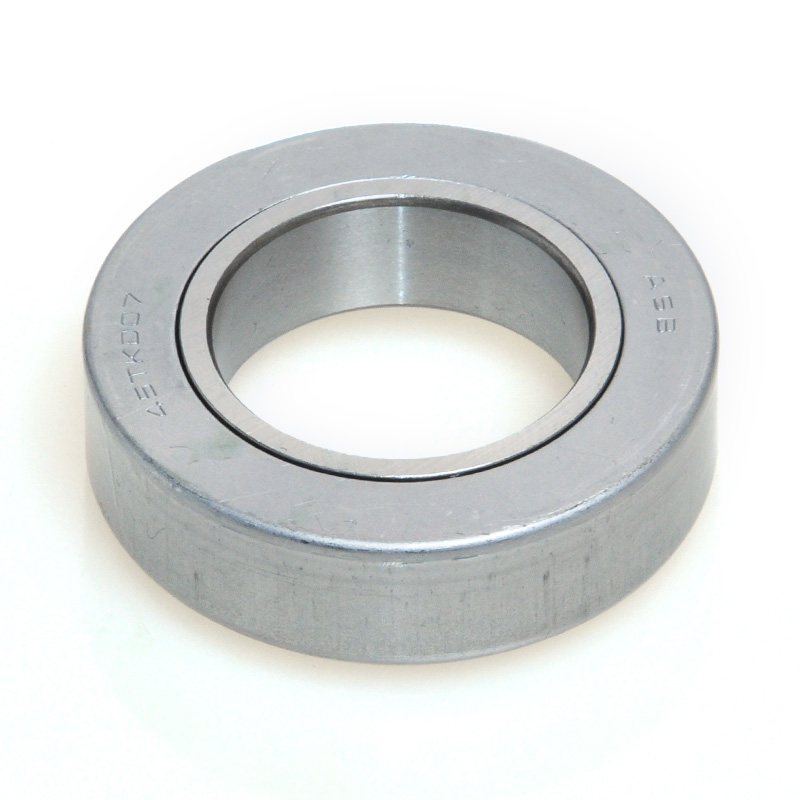
Common Failure Modes of Pinion Bearings
Identifying why a pinion bearing failed is as important as replacing it — otherwise the replacement bearing will fail for the same reason. The most frequently encountered failure modes and their root causes are:
| Failure Mode | Visual Signs | Most Likely Root Cause |
|---|---|---|
| Spalling (fatigue pitting) | Flaking of material from raceway or roller surface | Overload, excessive preload, or end of service life |
| Fretting corrosion | Red-brown oxide staining on bore or OD | Loose housing fit, insufficient interference fit |
| Brinelling (false) | Regularly spaced indentations matching roller pitch | Vibration while stationary (transport damage) |
| True brinelling | Indentations at roller spacing, plastic deformation | Static overload during installation or impact |
| Abrasive wear | Fine scoring on all contact surfaces, gray metallic debris in oil | Contaminated lubricant, failed seal |
| Adhesive wear (smearing) | Torn, displaced material on roller ends or rib | Inadequate lubrication, high slip velocity |
| Electrical erosion | Fluting (washboard pattern) on raceway | Stray electrical current through bearing (EDM) |
Contamination — the Number One Killer of Differential Pinion Bearings
Research by major bearing manufacturers consistently shows that contamination is responsible for approximately 14% of premature bearing failures in automotive applications and up to 30% in industrial off-highway equipment. In differential pinion bearings, contamination enters through a deteriorated pinion seal — the lip seal located at the front of the differential housing around the pinion shaft yoke. Once water, mud, or road grit bypasses the seal, it mixes with the gear oil and circulates through the pinion bearing. Even fine particles of 10 to 15 micrometers — smaller than a human hair — are large enough to cause three-body abrasive wear in a tapered roller bearing operating with a typical EHD film thickness of 0.5 to 2 micrometers.
This is why every professional differential rebuild should include a new pinion seal regardless of the apparent condition of the old one. The cost of a pinion seal is trivial compared to the cost of a second bearing replacement caused by contamination from a leaking seal.
Noise Diagnosis: How to Tell If a Pinion Bearing Is Failing
Pinion bearing noise is characteristically different from ring gear noise, wheel bearing noise, and driveshaft vibration — but distinguishing between them requires a systematic diagnostic approach. The following characteristics help isolate the fault to the pinion bearing position.
- Speed-sensitive whine that changes with vehicle speed but not with engine load — Points to a gear or bearing noise rather than a drivetrain resonance. Pinion bearing roughness typically produces a growling or rumbling tone that increases in frequency and intensity with road speed.
- Noise present under both acceleration and deceleration — Gear mesh noise typically changes significantly between load and coast, because the loaded flank of the tooth changes. Bearing noise, by contrast, is present under both conditions and may only vary slightly in character.
- Vibration felt through the floorboard at highway speeds — Pinion bearing roughness can transmit vibration through the driveshaft and into the cab. This is often confused with driveshaft imbalance; checking driveshaft runout first before attributing the symptom to the bearing is good diagnostic practice.
- Roughness felt when rotating the driveshaft yoke by hand — With the vehicle safely supported and the driveshaft disconnected at the differential flange, rotating the pinion yoke by hand while feeling for roughness, clicking, or notchiness in the bearing is a direct check. A good pinion bearing assembly should rotate smoothly with a consistent drag from the preload.
- Pinion shaft end-play detected with a dial indicator — Zero axial play is correct for a properly preloaded tapered roller bearing. Any measurable end-play (even 0.001 inch / 0.025 mm) in a differential that previously had none indicates bearing wear or preload loss.
Stethoscopic listening — using a mechanics stethoscope with the probe placed on the differential housing near the bearing position — can help isolate the noise source at idle speed with the drivetrain loaded. Always inspect the gear oil when investigating bearing noise; metallic debris, discoloration, or an unusual odor in the oil provides valuable diagnostic information about the severity and type of internal damage.
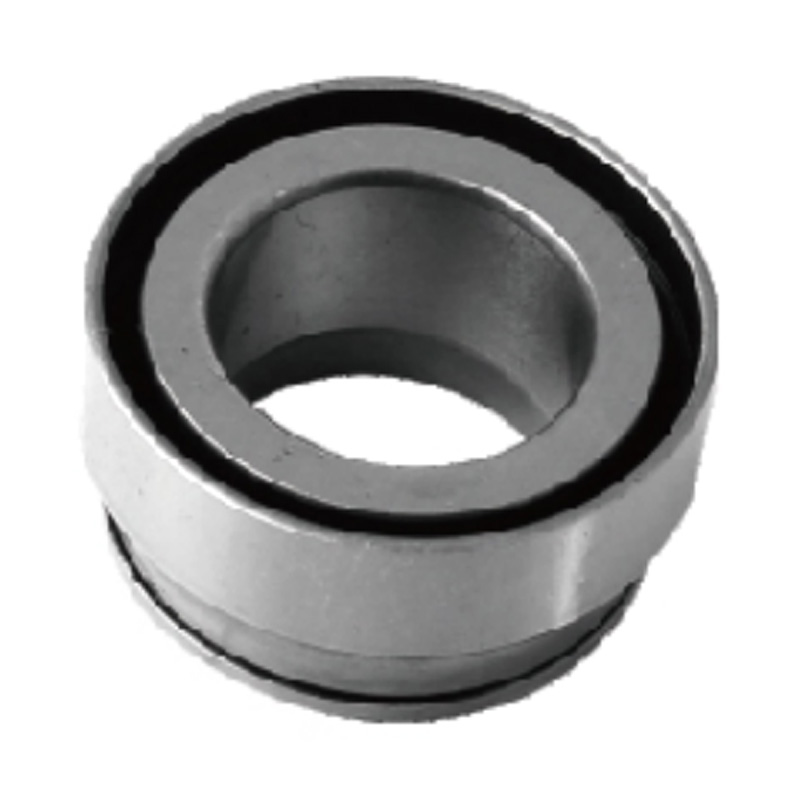
Pinion Bearing Replacement: Step-by-Step Process Overview
Replacing automotive differential pinion bearings is a precision task that requires the correct tools and a methodical approach. The following overview covers the key steps; always refer to the specific OEM service manual for torque specifications, shim selection procedures, and bearing part numbers for your application.
- Mark the driveshaft-to-flange orientation before disconnecting the driveshaft, to preserve driveshaft balance.
- Measure and record the pinion rotating torque before disassembly using an inch-pound torque wrench. This gives a baseline reference for the old bearing preload.
- Remove the pinion nut — typically a large castle nut or flange nut. Note the torque at which it breaks free, as this can indicate if the nut was properly torqued previously.
- Extract the pinion flange or yoke using a dedicated puller tool. Never strike the yoke with a hammer, as impact damage can brinell the front pinion bearing even before it is removed.
- Remove the pinion seal and set aside — a new seal will be installed.
- Drive out the pinion shaft from the housing, catching the crush sleeve or solid spacer and any shims that fall free.
- Press off the rear bearing inner race from the pinion shaft using a hydraulic press. Do not attempt to use a chisel or impact tool — the shaft can be scored or distorted.
- Drive out bearing outer races (cups) from the housing bores using the correct sized driver or a brass punch, alternating sides to drive evenly.
- Inspect the bearing bores in the housing for fretting, scoring, or out-of-round condition. An out-of-round bore (more than 0.001 inch / 0.025 mm) requires housing repair or replacement.
- Press in new bearing cups fully and squarely, using a driver tool that contacts the cup OD only. Confirm cups are seated by attempting to insert a 0.001-inch feeler gauge between the cup back face and the housing shoulder — there should be no gap.
- Install the new rear pinion bearing inner race onto the shaft, pressing on the inner race only — never press through the cage or rollers.
- Install the depth shim (if applicable to the carrier type) and a new crush sleeve or the solid spacer setup, then position the pinion assembly in the housing.
- Install the front bearing and seat the yoke, then tighten the pinion nut gradually while checking rotating torque frequently. With a crush sleeve, once the correct rotating torque is achieved, the nut must not be backed off — the sleeve cannot be "un-crushed."
- Install a new pinion seal after the preload is confirmed, using a seal driver to seat it flush and square.
The entire procedure typically takes an experienced technician 2 to 4 hours on a passenger car differential, depending on access and whether the carrier must also be removed for ring gear inspection.
Pinion Bearing Specifications: Key Parameters to Know Before Ordering
When sourcing replacement pinion bearings, whether for automotive or industrial applications, the following specification parameters determine whether a bearing is fit for purpose:
- Basic dynamic load rating (C) — The load in kilonewtons or kilogram-force that a bearing group can theoretically endure for one million revolutions. Higher values indicate a stronger bearing, but a bigger bearing is not always the right choice — it must fit the housing and shaft dimensions.
- Basic static load rating (C0) — The maximum load under which the bearing can remain stationary without suffering permanent deformation. Important for applications that experience shock loads or heavy static loading during assembly.
- Contact angle — In tapered roller bearings, the nominal contact angle determines the ratio of axial to radial capacity. A standard automotive differential front pinion bearing typically has a 30° to 34° contact angle; steeper angles are used where thrust loads dominate.
- Dimensional series — ISO dimensional series codes (e.g., 30205, 32207) define bore, OD, and width. Direct interchangeability requires matching all three dimensions, not just the bore diameter.
- Tolerance class — Standard ABEC/ISO tolerance classes range from class 0 (normal) through class 5, 4, 2 (progressively tighter). Most automotive differential pinion bearings are standard class, while precision machine tool and high-speed gearbox pinion bearings may require class 5 or class 4 tolerances for reduced runout.
- Material and heat treatment — Standard pinion bearings are made from through-hardened or case-carburized bearing steel (typically 52100 or equivalent) with a surface hardness of 58–64 HRC. High-temperature applications may require special steel grades with enhanced dimensional stability above 120°C.
For automotive applications, OEM part number cross-referencing through trusted bearing brands (SKF, Timken, NSK, FAG, NTN) ensures dimensional and material equivalence. Avoid sourcing pinion bearings from unknown manufacturers at unusually low prices — substandard steel or inconsistent heat treatment produces bearings that may appear identical but have significantly inferior fatigue life and spalling resistance. A failed rear axle pinion bearing can cause catastrophic drivetrain lockup at highway speed, making component quality a safety issue, not just a cost issue.
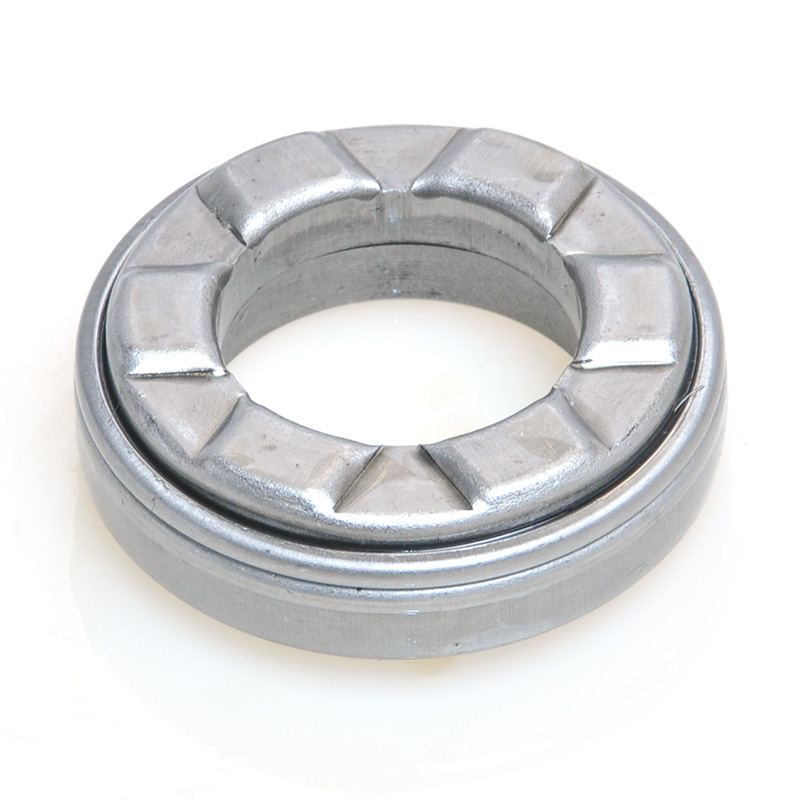
Pinion Bearings in Industrial and Heavy Equipment Applications
Beyond the automotive context, pinion bearings are critical components in a wide range of industrial systems. Understanding the differences in load, speed, and maintenance demands between sectors is important when selecting or specifying bearings for non-automotive applications.
Mining and Cement Mill Drives
Large ball mills and SAG mills used in mining are driven by an open gear set consisting of a large ring gear bolted to the mill shell and a pinion gear driven by a gearbox. The pinion shaft bearings in these applications carry enormous loads — it is not uncommon for the dynamic radial load on a single pinion bearing to exceed 500 kN — and operate in dusty, wet environments. Split cylindrical roller bearings (self-aligning spherical roller bearings are also commonly used) allow in-situ replacement without removing the pinion shaft, a major advantage given the scale of the equipment. Condition monitoring through vibration analysis and oil debris detection is standard practice; the cost of an unplanned mill stoppage due to bearing failure can exceed $500,000 per day in lost production.
Wind Turbine Gearboxes
Wind turbine main gearboxes convert low-speed rotor rotation (typically 10–20 RPM) to the high speed required by the generator (1,500–1,800 RPM) through multiple gear stages. The high-speed output stage pinion bearing operates at thousands of RPM while simultaneously experiencing variable load cycles driven by fluctuating wind speeds. This combination of high speed and variable loading creates a demanding environment for both bearing and lubricant. Micropitting — a form of surface fatigue caused by inadequate EHD film thickness under sliding conditions — is the most common bearing distress mode in wind turbine gearbox pinion positions. Upgraded gear oils with micropitting-resistant additive packages have become a standard recommendation in this sector.
Rack-and-Pinion Steering Systems
In automotive rack-and-pinion steering, the pinion is a small helical gear on the end of the steering column shaft that meshes with a toothed rack. The pinion shaft is supported by a needle roller bearing on the input side and a ball bearing or bushing on the rack side. These bearings carry moderate loads but must operate with minimal friction to deliver precise, low-effort steering feel. Pinion bearing wear in rack-and-pinion systems typically manifests as steering looseness, clunking on direction changes, or a notchy on-center feel. Most rack-and-pinion assemblies are replaced as a unit rather than having bearings serviced individually, as the rack housing bore tolerances and bearing preload settings are factory-set.
Extending Pinion Bearing Service Life: Practical Recommendations
Most premature pinion bearing failures are preventable. The following practices, applied consistently, can extend bearing service life to or beyond the original design specification.
- Inspect and replace the pinion seal at every differential service or whenever oil seepage is detected. Seal replacement is inexpensive insurance against the contamination that causes the majority of premature bearing failures.
- Use the OEM-specified gear oil grade and change it on schedule. Gear oil degrades over time — oxidation, water ingress, and metal particle accumulation reduce its bearing film-forming ability. Most manufacturers recommend gear oil changes every 30,000 to 60,000 miles in normal service, and after every water crossing or deep-water exposure in off-road vehicles.
- Never exceed the vehicle's rated towing or payload capacity. Consistent overloading places loads on the pinion bearing that exceed its design ratings, accelerating fatigue spalling. A heavily loaded trailer on a long downhill grade generates particularly high thrust loads on the front pinion bearing through engine braking.
- Verify correct pinion preload during any differential rebuild. Reusing a worn crush sleeve or failing to re-check preload after component changes results in under-preloaded bearings that fail prematurely due to shaft deflection and gear misalignment.
- Install bearings correctly. Use proper press tooling, heat the inner race when pressing onto the shaft rather than driving through the cage, and handle bearings with clean gloves to prevent hand sweat — which contains chlorides that initiate corrosion pitting on bare bearing steel within hours.
- Investigate and address the root cause of any bearing failure before installing a replacement. A new bearing installed in an unchanged environment that caused the previous failure will fail in the same way. Whether it is a sealing issue, lubrication deficiency, overload condition, or misalignment problem, the root cause must be corrected for the replacement bearing to achieve its design life.
For fleet operators and equipment managers, implementing a condition-based monitoring protocol — combining periodic oil analysis, vibration signature trending, and temperature monitoring — provides early warning of bearing distress before it progresses to catastrophic failure. Data from oil analysis labs indicates that bearings flagged for elevated iron and chromium particles in oil analysis typically show macroscopic damage within 10,000 to 30,000 miles if the oil is not changed and the source of contamination is not addressed. Early intervention at the oil analysis stage costs a fraction of a full differential rebuild following bearing collapse.
Related Products
Contact Us

A production enterprise specializing in the production of automobile clutch bearings and other non-standard bearings.
- Contact Information
-
 +86-575-86013311
 -
 +86-575-86013322
 -
 No. 50, Tashan 1st Road, Xinchang County, Shaoxing, Zhejiang, China

Copyrigh t© Xinchang Heyang Auto Parts Co., Ltd.. All Rights Reserved.
China auto bearing manufacturers wholesale auto bearing supplier
