 +86-13867573512
 [email protected]
 Get a quote

 English
  Español
Diff Pinion Bearing: Symptoms, Causes, Replacement & Cost Guide
Author: Heyang Date: Jul 13, 2026
Content
- 1 What a Diff Pinion Bearing Actually Does
- 2 Construction and Anatomy of a Pinion Bearing
- 3 Types of Diff Pinion Bearings and Mounting Layouts
- 4 Signs a Diff Pinion Bearing Is Failing
- 5 What Actually Causes Pinion Bearing Failure
- 6 How a Diff Pinion Bearing Is Replaced
- 7 Common Mistakes That Shorten a New Bearing's Life
- 8 How Driving Style and Environment Affect Bearing Life
- 9 Typical Cost to Replace a Diff Pinion Bearing
- 10 Extending Pinion Bearing Life
- 11 Frequently Asked Questions
- 11.1 Can I replace just the pinion bearing without changing the whole gear set?
- 11.2 How long can a vehicle be driven with a bad pinion bearing?
- 11.3 Is a diff pinion bearing the same part as a wheel bearing?
- 11.4 What preload torque should a new pinion bearing be set to?
- 11.5 Does synthetic gear oil help pinion bearing life?
- 11.6 Why does the differential need a pattern check after a bearing replacement?
- 11.7 Can a pinion bearing be reused if it still looks fine visually?
- 11.8 Will a bad pinion bearing trigger a warning light on the dashboard?
- 11.9 Does a limited-slip differential wear its pinion bearing faster than an open differential?
What a Diff Pinion Bearing Actually Does
A diff pinion bearing is the tapered roller bearing, or matched pair of bearings, that supports the pinion gear shaft inside a differential housing, holding it in precise alignment with the ring gear while carrying both radial load from gear mesh and thrust load from the helical gear angle. If a diff pinion bearing is worn, under-preloaded, or contaminated, the pinion shaft shifts under load, gear mesh pattern moves off-center, and the result is howling noise on acceleration or deceleration, gear wear, and eventually total drivetrain failure. Replacing a failed diff pinion bearing on its own is rarely enough; the mating race, the collapsible spacer or shim pack, and the pinion seal are almost always replaced together to restore correct bearing preload.
The pinion is one of the hardest-working components in a vehicle's drivetrain. Every time torque flows from the driveshaft to the wheels, it passes through the pinion gear first, meaning the pinion bearing set absorbs the full torque multiplication of the final drive ratio, the thrust loads generated by the spiral or hypoid gear angle, and the shock loads of gear changes, clutch engagement, and uneven road surfaces. Because of this, pinion bearings are engineered to far tighter tolerances than most other bearings on a vehicle, and their replacement is treated as a precision machining task rather than a bolt-on parts swap.
This guide covers bearing construction and types, how to tell a pinion bearing problem apart from other drivetrain noises, the root causes behind premature failure, the full replacement procedure a shop follows, realistic cost ranges, how bearing life differs between daily driving, towing, and off-road use, common installation mistakes, and a detailed FAQ section addressing the questions most frequently asked about pinion bearing service.
Construction and Anatomy of a Pinion Bearing
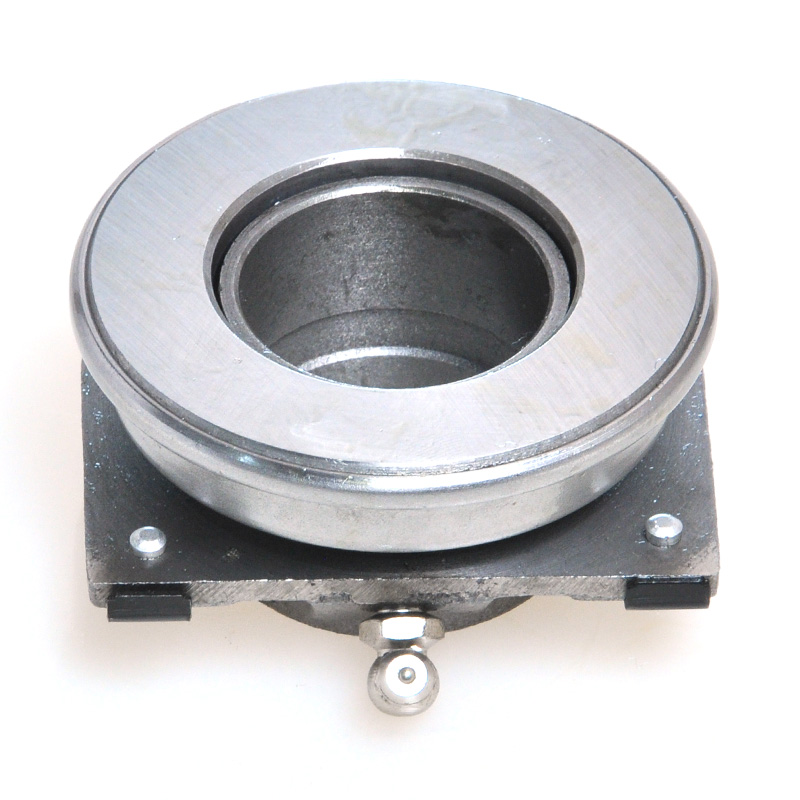
Understanding what a pinion bearing is actually made of explains why preload, cleanliness, and correct fitment matter so much more here than on a simple wheel bearing. A pinion bearing set is a tapered roller bearing, meaning the rollers are shaped as truncated cones rather than cylinders or balls. This geometry lets the bearing carry combined radial and axial (thrust) loads at the same time, which is essential because the pinion gear pushes both sideways and lengthwise against its bearings as it drives the ring gear.
Cone Assembly
The cone is the inner race, pressed directly onto the pinion shaft, with the tapered rollers and a retaining cage riveted or welded around it. The cone rotates with the pinion at all times and is the component most often scored when a bearing runs dry.
Cup (Outer Race)
The cup is pressed into the differential housing bore and stays stationary while the cone and rollers turn inside it. A cup that spins in its bore, often called a "spun cup," is a common secondary failure once a bearing has worn enough to lose its interference fit.
Roller Cage
The cage keeps the tapered rollers evenly spaced around the cone. A collapsed or fractured cage lets rollers bunch together, which is one of the fastest paths to catastrophic bearing seizure since it concentrates the entire load onto only a few rollers.
Bearing steel used in pinion bearings is typically a through-hardened chromium alloy, heat treated to a surface hardness in the range of 58 to 65 on the Rockwell C scale, which balances wear resistance against the toughness needed to survive shock loading without cracking. Because tapered roller bearings can only be adjusted, not simply bolted in with a fixed clearance, they require a preload procedure using a crush sleeve, a solid spacer with select-fit shims, or in some designs a threaded adjuster nut, all of which are discussed in more detail later in this guide.
Types of Diff Pinion Bearings and Mounting Layouts
Nearly every road-going differential uses tapered roller bearings for the pinion, arranged in one of two layouts. Understanding which layout is used matters because it changes how preload is set, how the bearing wears over time, and how much labor is involved when it eventually needs replacement.
Straddle-Mounted (Two-Bearing) Design
The pinion head sits between the front and rear bearing, so both bearings share radial load directly. This is the layout found in most passenger car and light-truck differentials, including Ford 8.8, GM 8.6, and Toyota 8-inch style housings. Straddle-mounted designs generally distribute load more evenly and tend to tolerate marginally low preload for longer before symptoms appear, though the eventual failure is often more sudden.
Overhung (Pilot-Bearing) Design
A smaller pilot bearing supports the far end of the pinion nose ahead of the ring gear, common in heavier-duty truck axles such as the Dana 60 and Dana 80. The pilot bearing takes less load individually but failure here still throws off pinion depth and mesh pattern, and because the pilot bearing sits deep in the nose of the housing, it is usually the more labor-intensive of the two bearings to replace.
A smaller number of differentials, mostly older or specialty applications, use a locknut-adjusted single bearing pair with a threaded collar rather than a crush sleeve or shim pack. This design allows preload to be dialed in and re-checked without disassembly, which is convenient for repeated adjustment but is less common in modern production axles because it adds machining cost to the housing.
| Differential Family | Bearing Layout | Preload Method |
|---|---|---|
| Ford 8.8 / 9-inch | Straddle-mounted | Crush sleeve or solid spacer with shims |
| GM 8.6 / 9.5 | Straddle-mounted | Collapsible crush sleeve |
| Toyota 8-inch | Straddle-mounted | Solid spacer with select-fit shims |
| Dana 60 / 80 | Overhung with pilot bearing | Shim pack behind bearing cup |
| Older locknut-style axles | Straddle-mounted | Threaded adjuster collar and lock ring |
Signs a Diff Pinion Bearing Is Failing
Pinion bearing wear rarely announces itself with a single obvious symptom. Instead, it tends to layer several smaller changes in sound and feel that get worse over a few thousand kilometers, which is why an accurate diagnosis usually looks at a combination of the signs below rather than any one on its own.
- Rising-pitch whine under acceleration that fades or changes when coasting is one of the clearest early indicators of pinion bearing wear rather than a chassis wheel bearing, which usually stays constant regardless of throttle.
- A distinct growl on deceleration that is absent under steady cruise often points to backlash changes from a worn bearing letting the pinion shift rearward.
- Metallic particles or a grey-black sludge in the differential fluid on a magnetic drain plug, well beyond the fine grey film considered normal wear-in residue.
- Play felt at the pinion flange when the driveshaft is disconnected and the flange is rocked by hand, indicating the bearing has lost its designed preload.
- A new fluid leak at the pinion seal, since a bearing that has lost preload allows the pinion to walk axially and wear the seal lip unevenly.
- A cyclic clunk felt through the floor or seat during gear changes between drive and reverse, which usually means backlash has opened up as the pinion has drifted out of its original position.
- A burning or hot-metal smell after driving, which points to a bearing running with insufficient lubrication or excessive preload generating heat well above the differential's normal operating range.
Telling Pinion Bearing Noise Apart From Other Drivetrain Noises
Because several drivetrain components can produce a similar whine or growl, isolating the source correctly avoids paying for parts that were never the problem. The table below summarizes the distinguishing pattern for each common source.
| Source | Noise Pattern | Changes With |
|---|---|---|
| Pinion bearing | Whine or growl, present in both drive and coast | Vehicle speed, not steering input |
| Ring and pinion gear mesh | Whine that intensifies strongly under load | Throttle position, more than coasting |
| Wheel bearing | Steady drone, constant regardless of throttle | Turning left or right, load shift on that wheel |
| Worn CV joint | Clicking on turns rather than a whine | Steering angle during turns |
| Low differential fluid | Whine that appears gradually across weeks | Persists at all speeds once present |
What Actually Causes Pinion Bearing Failure
Insufficient or Uneven Preload
Tapered roller bearings rely on preload, an intentional light clamping force, to keep the rollers seated against the race under all load directions. Set preload too low and the rollers skid rather than roll cleanly, generating heat and flat-spotting the rollers within a short service interval. Pinion bearing preload on most passenger differentials falls between 15 and 30 inch-pounds of rotating torque for used bearings and higher for new ones, and it is checked with an inch-pound torque wrench on the pinion nut, not estimated by feel. Preload that is set too high is just as damaging as too little, since it forces the rollers to run under constant unnecessary load, raising operating temperature and shortening bearing life even under light driving conditions.
Contaminated or Degraded Gear Oil
Hypoid gear oil additives shear down with heat and mileage, and once viscosity and film strength drop, the bearing rollers and races run in metal-to-metal contact instead of a protective oil film. Water intrusion from river crossings or pressure washing is a second common contamination path, since water displaces the additive package and accelerates pitting on the bearing races within days rather than months. Dust and grit entering through a torn axle vent or a failed pinion seal is a third path, and once abrasive particles enter the oil they act like a grinding compound on both the rollers and the races every time the pinion turns.
Towing and Sustained High Load
Sustained towing raises differential operating temperature, which reduces oil film thickness right when bearing load is highest. Vehicles used for regular towing benefit from a fluid change interval roughly half of the standard recommendation and, where available, an auxiliary differential cooler. Repeated short, hard launches, such as trailer starts on an incline or aggressive off-the-line acceleration, place a brief but very high thrust spike on the pinion bearing that accumulates fatigue faster than steady-state driving of the same total distance.
Incorrect Reassembly After Prior Service
A large share of premature pinion bearing failures trace back to a prior gear or bearing service where the crush sleeve was over-tightened, the shim pack was measured incorrectly, or the pinion depth was not verified with a pattern check, leaving the bearing loaded at an angle it was never designed to carry. A cup or cone pressed in slightly cocked, rather than square to the housing bore, is another frequent installation error that shows up as premature wear concentrated on one side of the roller face rather than evenly around the bearing.
Extended Idle Storage and Corrosion
A vehicle parked for months with the differential fluid sitting still can develop light surface corrosion (often called false brinelling or fretting) at the exact point where each roller rests against the race, since there is no rotation to redistribute the thin protective oil film. When the vehicle is driven again, this creates a faint but constant vibration or noise at low speed even though the bearing has done very little actual work.
How a Diff Pinion Bearing Is Replaced
Because pinion bearing replacement resets depth and preload, it follows a fixed sequence rather than a simple swap. The steps below reflect the order a differential shop follows on a straddle-mounted axle.
- Mark and remove the driveshaft, then record the number of exposed pinion nut threads or use a dial indicator to note the original pinion depth before disassembly.
- Remove the pinion nut, flange, and seal, then press the pinion out of the housing along with the front and rear bearing cones.
- Remove the carrier and ring gear assembly if the housing design requires it for front bearing cup access, marking the position of the existing shims so the original setup can be referenced if needed.
- Press both worn bearing cups out of the housing bores and inspect the bores for scoring before installing new cups squarely with a driver that contacts the cup's outer edge only, never the rollers or cage.
- Install a new solid spacer or crush sleeve, select the correct pinion depth shim based on the etched marking on the old pinion versus the new pinion, and press on the new front and rear bearing cones with a bearing press, never a hammer directly on the cone face.
- Install the pinion into the housing with a new seal and flange, then tighten the pinion nut incrementally while checking rotating preload with an inch-pound torque wrench after every small increase in torque, stopping the moment the specified preload range is reached.
- Reinstall the carrier, set backlash against the ring gear using a dial indicator on the ring gear tooth, and apply marking compound to confirm the gear pattern sits correctly on the tooth face before final assembly.
- Refill with the manufacturer-specified gear oil and, where called for, friction modifier for limited-slip units, then road test and recheck fluid level once the housing has cooled.
Crush Sleeve Versus Solid Spacer and Shims
Two different methods are used to set the distance between the two pinion bearings, and each has a distinct effect on how the job is done. A collapsible crush sleeve is a soft, purpose-made spacer that is progressively crushed as the pinion nut is tightened, gradually closing bearing clearance until the target preload is reached; the tradeoff is that a crush sleeve is a single-use part, since over-tightening it even slightly means backing off and starting again with a brand new sleeve rather than reusing the crushed one. A solid spacer paired with a stack of thin shims achieves the same result by physically selecting the shim thickness that produces correct preload, which takes more measuring but allows the pinion nut to be tightened to a fixed torque value repeatably without the risk of accidentally over-crushing anything.
Common Mistakes That Shorten a New Bearing's Life
A brand-new pinion bearing can still fail early if the surrounding installation steps are rushed. The most frequent avoidable mistakes include the following.
- Reusing a crush sleeve that has already been compressed once, which leaves preload permanently too low no matter how tight the pinion nut is torqued.
- Skipping the marking-compound gear pattern check after the bearing job, which can leave the ring and pinion meshing on the tooth edge instead of the tooth center, wearing both the gear set and the new bearing far faster than expected.
- Pressing a new bearing cone onto the pinion shaft using heat from an open flame instead of an induction heater or oil bath, which can unevenly temper the bearing steel and weaken it in a way that is not visible until it fails later.
- Failing to clean the housing bore of old gasket material, metal shavings, or corrosion before pressing in a new bearing cup, which prevents the cup from seating fully square and concentrates load unevenly.
- Overfilling or underfilling gear oil after the job, since either extreme changes how much lubricant actually reaches the pinion bearing during operation.
How Driving Style and Environment Affect Bearing Life
Daily Commuting
Under mild daily use with steady speeds and light loads, a correctly set pinion bearing on a well-maintained differential commonly lasts well beyond 150,000 miles, with fluid changes being the main variable that determines whether it reaches the upper end of that range.
Regular Towing
Frequent towing near the vehicle's rated capacity raises sustained operating temperature and thrust load, and pinion bearing life in these conditions can be noticeably shorter unless fluid changes are moved to a more frequent interval and, where available, an auxiliary cooler is fitted.
Off-Road and Water Crossings
Deep water crossings are one of the fastest ways to contaminate a differential, since a hot housing cooling rapidly in cold water can draw water in past the axle vent or seal; an inspection of fluid condition after any significant water crossing is a simple way to catch contamination before it reaches the bearing.
Track or Performance Use
Repeated high-rpm, high-torque launches concentrate thrust load spikes on the pinion bearing, and vehicles used this way often benefit from a shorter fluid change interval and a periodic check of pinion flange play even when no noise has yet developed.
Typical Cost to Replace a Diff Pinion Bearing
Cost depends heavily on whether the crush sleeve design allows reuse of the shim pack or requires a full pattern re-set, and on whether the carrier has to be removed to access the front pinion bearing bore.
| Item | Typical Range |
|---|---|
| Pinion bearing set (front and rear cone and cup) | $60 to $180 |
| Pinion seal, crush sleeve, and shim kit | $25 to $70 |
| Gear oil and friction modifier | $20 to $45 |
| Shop labor, bearing only, pattern unchanged | $180 to $350 |
| Shop labor, full pinion depth and pattern re-set | $350 to $650 |
| Additional cost if housing bore or ring gear is damaged | $400 to $1,200 and up |
Waiting until a bearing fails completely usually costs more than the numbers above, since a seized or spun pinion bearing frequently damages the housing bore or takes the ring and pinion gear set with it, turning a bearing job into a full gear set replacement. Catching the noise early and scheduling a bearing-only repair is consistently the cheaper outcome across nearly every case a differential shop sees.
DIY Replacement Versus Professional Service
Replacing a pinion bearing at home is possible for an experienced hobbyist mechanic, but it requires a bearing press, an inch-pound torque wrench with fine enough resolution to read single-digit preload changes, a dial indicator for backlash and pinion depth verification, and marking compound to check the gear pattern. Without this equipment, preload and pattern cannot be verified accurately, and a bearing installed without a proper pattern check frequently fails again within a few thousand miles even though it appeared correctly installed. For this reason, most owners without differential-specific tools have this job done at a shop that performs gear and bearing work regularly rather than attempting it with general automotive tools alone.
Extending Pinion Bearing Life
Follow the Fluid Interval
Change differential fluid at the interval specified for the vehicle's duty cycle, typically every 30,000 to 60,000 miles under normal use and roughly half that under regular towing or off-road use.
Check for Leaks Early
A slow pinion seal leak that goes unnoticed drops fluid level below the bearing, so the top rollers run dry well before the level looks low enough to worry about on a quick glance.
Address Bearing Noise Immediately
A whine caught in its early stage is almost always a bearing-only repair; the same noise ignored for another 5,000 to 10,000 miles frequently spreads wear to the ring and pinion tooth faces.
Verify Preload After Any Service
Any time the pinion nut has been loosened, rotating preload should be rechecked with an inch-pound torque wrench rather than assumed to still be correct, since the crush sleeve does not reset itself.
Inspect After Water Crossings
A quick fluid color and smell check after a deep water crossing or a pressure wash near the axle catches contamination early, before it has a chance to pit the bearing races.
Keep the Vent Clear
The axle vent releases pressure buildup from heat cycling; a blocked or kinked vent line can force fluid or contaminants past the pinion seal, so it is worth checking during routine fluid service.
Frequently Asked Questions
Can I replace just the pinion bearing without changing the whole gear set?
Yes, in most cases the pinion bearing, seal, and crush sleeve or spacer can be replaced on their own while reusing the existing ring and pinion gear set, provided the gear teeth show no pitting or heat discoloration and the pattern can be reset with the correct depth shim.
How long can a vehicle be driven with a bad pinion bearing?
There is no safe fixed distance; a bearing that is only starting to whine may last several thousand more miles, while one that already shows measurable flange play can seize within a day of hard use, so the safer approach is scheduling repair as soon as the noise is identified rather than driving on a timeline.
Is a diff pinion bearing the same part as a wheel bearing?
No. A wheel bearing supports the hub and wheel outside the differential housing, while a diff pinion bearing sits inside the differential and supports the pinion gear shaft; the two produce similar whining or growling noises, which is why a proper diagnosis, not just the sound, is needed before ordering parts.
What preload torque should a new pinion bearing be set to?
Specifications vary by axle, but a common target for a new bearing set on light-duty axles is 20 to 30 inch-pounds of rotating torque measured at the pinion nut with the seal installed dry, while a used bearing set is typically set lower, around 15 to 20 inch-pounds; the applicable factory service manual should always be checked for the specific axle code.
Does synthetic gear oil help pinion bearing life?
Synthetic gear oil generally maintains viscosity and film strength better at high operating temperatures than mineral gear oil, which is one reason it is commonly specified for towing-duty axles and limited-slip differentials, though it does not compensate for incorrect preload or a damaged bearing race.
Why does the differential need a pattern check after a bearing replacement?
Swapping the pinion bearing changes the shim stack that sets pinion depth, and even a shift of a few thousandths of an inch moves where the ring gear tooth contacts the pinion tooth, so the marking-compound pattern check confirms the new bearing has not pushed the gear mesh toward the tooth edge, which would cause rapid wear.
Can a pinion bearing be reused if it still looks fine visually?
A bearing that has been removed from its cup should generally not be reinstalled even if it looks acceptable, since the rollers and races develop a specific microscopic wear pattern matched to each other over time, and reassembling a used cone with a new cup, or vice versa, tends to accelerate wear on both parts.
Will a bad pinion bearing trigger a warning light on the dashboard?
Most vehicles have no direct sensor monitoring pinion bearing condition, so a warning light rarely appears from this issue alone; the noise, vibration, and fluid condition remain the primary ways the problem is noticed before it becomes severe enough to affect other systems.
Does a limited-slip differential wear its pinion bearing faster than an open differential?
Not directly, since the pinion bearing itself experiences similar loads regardless of whether the carrier is open or limited-slip; however, limited-slip units generate additional heat from the clutch packs, and if the correct friction-modified gear oil is not used, that added heat can shorten the life of every component in the housing, the pinion bearing included.
Related Products
Contact Us

A production enterprise specializing in the production of automobile clutch bearings and other non-standard bearings.
- Contact Information
-
 +86-575-86013311
 -
 +86-575-86013322
 -
 No. 50, Tashan 1st Road, Xinchang County, Shaoxing, Zhejiang, China

Copyrigh t© Xinchang Heyang Auto Parts Co., Ltd.. All Rights Reserved.
China auto bearing manufacturers wholesale auto bearing supplier
