 +86-13867573512
 [email protected]
 Get a quote

 English
  Español
How to test clutch release bearing?
Author: Heyang Date: Feb 09, 2026
Content
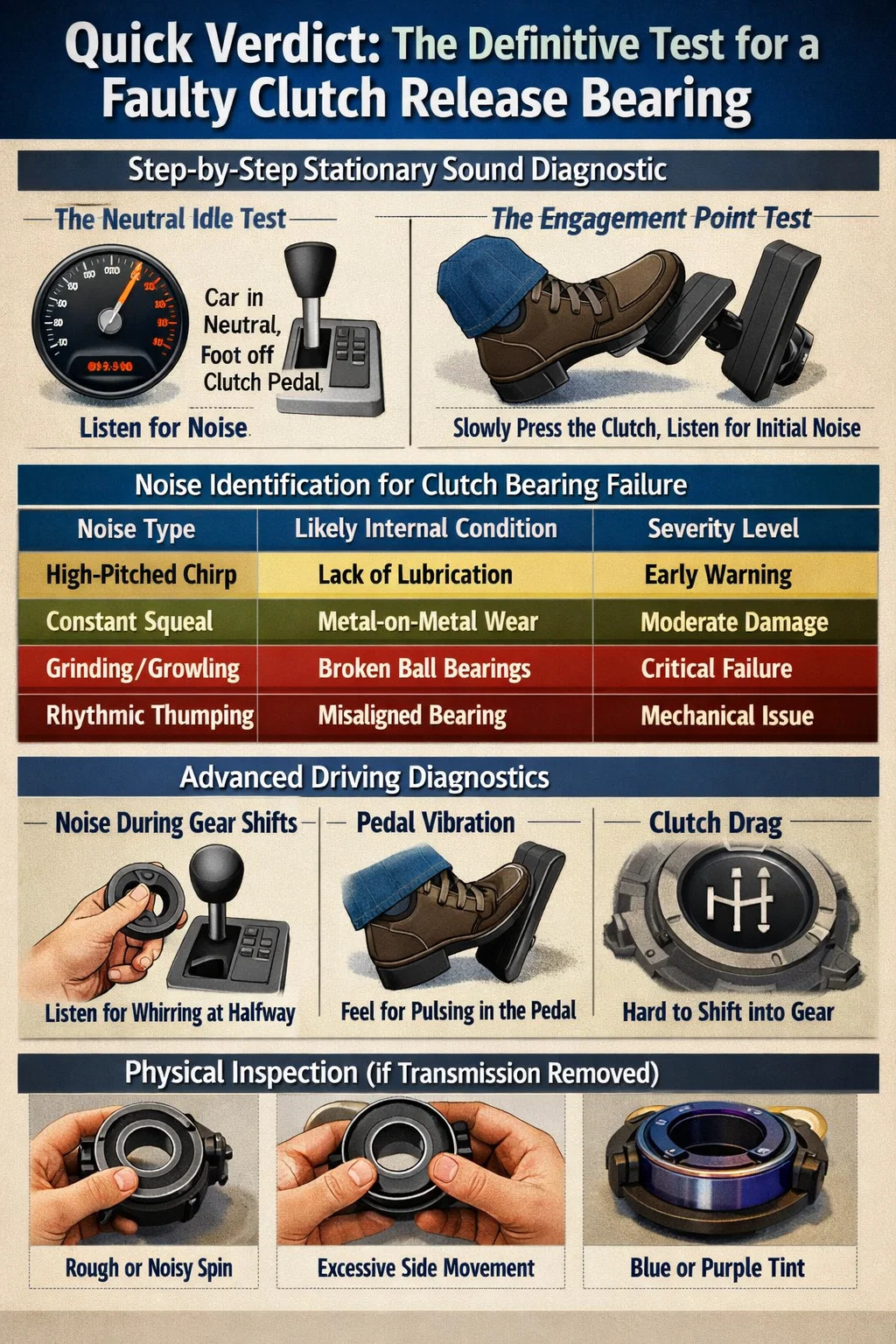
Quick Verdict: The Definitive Test for a Faulty Clutch Release Bearing
The most reliable way to test a clutch release bearing (also known as a throw-out bearing) is to perform a sound-sync test with the engine running. If you hear a chirping, squealing, or growling noise only when the clutch pedal is depressed, and that noise disappears completely when you release the pedal, the bearing is almost certainly failing. This happens because the bearing is only under load and spinning rapidly when it makes contact with the pressure plate fingers during pedal engagement.
Step-by-Step Stationary Sound Diagnostic
To accurately isolate the clutch release bearing from other transmission components like the input shaft bearing or pilot bearing, follow this specific sequence:
The Neutral Idle Test
Start your vehicle and leave it in neutral with your foot off the clutch pedal. Listen for any rumbling. If the car is quiet here but starts screaming when you push the pedal, you have identified the clutch release bearing as the culprit.
The Engagement Point Test
Slowly press the pedal. If the noise begins the moment you take up the "free play" (the first inch or two of travel), it confirms the bearing is making contact with the pressure plate and failing under that initial friction. If the noise only happens when the pedal is floored, the bearing may be seizing or the diaphragm springs of the clutch are damaged.
Interpreting Different Diagnostic Noises
The specific type of sound can tell you exactly what is happening inside the bell housing. Use this table to categorize the sounds you hear during your clutch release bearing test:
| Noise Type | Likely Internal Condition | Severity Level |
|---|---|---|
| High-pitched Chirp | Lack of lubrication/Dry rollers | Early Warning |
| Constant Squeal | Excessive heat/Metal-on-metal wear | Moderate Damage |
| Grinding/Growling | Broken ball bearings/Pitted races | Critical Failure |
| Rhythmic Thumping | Misaligned bearing or bent fork | Mechanical Issue |
Advanced Driving Diagnostics
Testing the clutch release bearing while driving requires paying attention to vibrations and shift quality:
- Listen for noise changes during gear shifts. If the "whirring" sound peaks exactly when the clutch is halfway depressed during a shift, the bearing is struggling with the transition of load.
- Feel for vibrations through the pedal. A failing clutch release bearing will often transmit a pulsating sensation to your foot because the internal rollers are no longer smooth.
- Observe clutch "drag." If a bearing is seizing, it may not allow the clutch to fully disengage, making it hard to slip into First gear or Reverse from a standstill.
Physical Inspection (If Transmission is Removed)
If you have gone as far as removing the gearbox to check the clutch system, you should perform these physical checks on the clutch release bearing:
- The Spin Test: Hold the inner race and spin the outer part of the bearing. It should spin silently and smoothly. If it feels "gritty," "crunchy," or stops abruptly, it is dead.
- The Lateral Play Test: Try to wiggle the bearing side-to-side. Excessive play indicates the internal races are worn out.
- Heat Discoloration: Check for blue or purple tints on the metal surface. This proves the clutch release bearing has been overheating, likely due to a driver riding the clutch.
Common Misdiagnoses to Avoid
Do not confuse a bad clutch release bearing with these similar issues:
- Input Shaft Bearing: This makes noise when the clutch is OUT (pedal released) and the car is in neutral. The noise goes away when you press the pedal—the exact opposite of a release bearing.
- Pilot Bearing: This noise only occurs when the engine is running, the clutch is pushed IN, and the car is in gear but stopped.
- Clutch Fork Friction: A dry pivot ball on the clutch fork can cause a "creaking" sound when pressing the pedal, which is often mistaken for a bearing noise.
If your test results show noise specifically during the clutch release bearing engagement window, plan for a replacement of the entire clutch kit immediately to avoid being stranded.
Related Products
Contact Us

A production enterprise specializing in the production of automobile clutch bearings and other non-standard bearings.
- Contact Information
-
 +86-575-86013311
 -
 +86-575-86013322
 -
 No. 50, Tashan 1st Road, Xinchang County, Shaoxing, Zhejiang, China

Copyrigh t© Xinchang Heyang Auto Parts Co., Ltd.. All Rights Reserved.
China auto bearing manufacturers wholesale auto bearing supplier
