 +86-13867573512
 [email protected]
 Get a quote

 English
  Español
Should You Replace the Clutch Release Bearing? Complete Guide
Author: Heyang Date: Jun 15, 2026
Content
- 1 Quick Answer: When You Should Replace a Clutch Release Bearing
- 2 Symptoms That Point Directly to a Worn Clutch Release Bearing
- 3 Typical Service Life and Mileage Expectations
- 4 Decision Framework: Replace, Inspect, or Leave It Alone
- 5 Types of Clutch Release Bearings and How to Identify Yours
- 6 Installation Tips That Prevent Premature Bearing Failure
- 7 Common Mistakes That Lead to Repeat Clutch Jobs
- 8 Cost Breakdown: Bearing Alone Versus Full Clutch Kit
- 9 Final Recommendation
Quick Answer: When You Should Replace a Clutch Release Bearing
A clutch release bearing should be replaced any time you replace the clutch disc, pressure plate, or flywheel during a clutch job, even if the old bearing still spins freely on the bench. The reason is straightforward: this bearing is buried behind the transmission, and the labor required to access it again later, pulling the transmission, often a driveshaft, the slave cylinder or fork, and the bell housing, costs far more in shop time than the part itself. Most release bearings cost between 15 and 80 USD for common passenger vehicles, while the labor to swap a clutch kit typically runs 4 to 8 hours. Skipping the bearing to save 30 to 60 dollars on a job that already costs 800 to 1,500 dollars in labor is not a sound trade. If you notice grinding, chirping, or rattling noises when the clutch pedal is depressed, especially noises that change pitch with engine RPM but not road speed, that is a strong sign the release bearing is worn and needs attention regardless of clutch disc condition.
Symptoms That Point Directly to a Worn Clutch Release Bearing
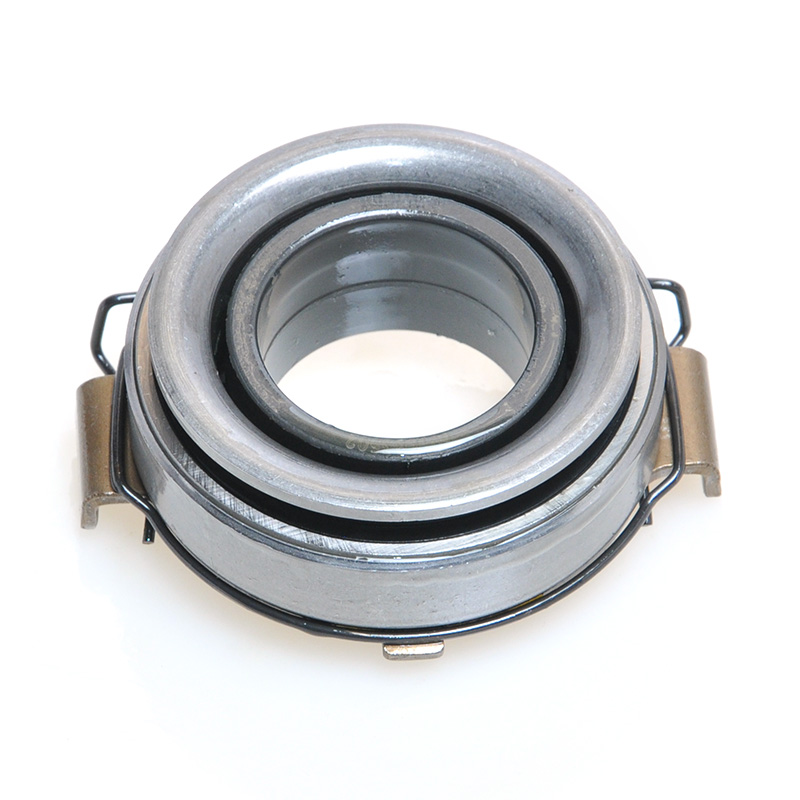
The clutch release bearing, sometimes called a throwout bearing, sits between the clutch fork or hydraulic slave cylinder and the pressure plate fingers or diaphragm spring. Its job is to press against the rotating pressure plate every time the clutch pedal is pushed, converting the driver's pedal motion into pressure plate movement without grinding metal against metal. Because it spins constantly whenever the clutch is disengaged, it wears differently than other clutch components and produces its own distinct failure signs.
Noise-Based Warning Signs
- A high-pitched squeal or chirp that appears only when the clutch pedal is pressed and disappears when the pedal is released
- A grinding or rumbling noise that increases in volume as engine RPM rises, independent of vehicle speed
- A rattling sound at idle with the clutch pedal up, which can indicate the bearing has developed play on its hub
- A whirring noise that changes when shifting from neutral to a gear with the clutch depressed
Feel-Based Warning Signs
- A clutch pedal that feels notchy, gritty, or vibrates under your foot during engagement
- Difficulty shifting gears smoothly, particularly into reverse or first gear from a stop
- A pedal that sticks partway through its travel or returns slowly
Many technicians report that a failing release bearing produces a sound similar to a dry wheel bearing, a continuous mechanical whine that pulses with engine speed. According to data compiled by aftermarket clutch kit manufacturers, release bearing noise complaints account for roughly 18 to 22 percent of all clutch-related warranty inquiries, frequently appearing between 60,000 and 100,000 miles on vehicles with manual transmissions.
Typical Service Life and Mileage Expectations
Clutch release bearings are sealed, pre-greased units with no field-serviceable lubrication points on most modern vehicles. Their lifespan depends heavily on driving habits, particularly how much time a driver spends with the clutch pedal partially depressed, a habit sometimes called riding the clutch, which keeps the bearing under constant load and spinning rather than at rest.
| Driving Style | Typical Bearing Lifespan (Miles) | Common Cause of Early Wear |
|---|---|---|
| Highway commuter, light traffic | 90,000 to 120,000 | Minimal, mostly matches clutch disc life |
| Urban stop-and-go traffic | 60,000 to 90,000 | Frequent pedal modulation, resting foot on pedal |
| Towing or performance driving | 40,000 to 70,000 | Higher clamping loads, aggressive launches |
| Hydraulic system with internal slave cylinder | Varies, tied to concentric slave cylinder | Fluid contamination, seal degradation |
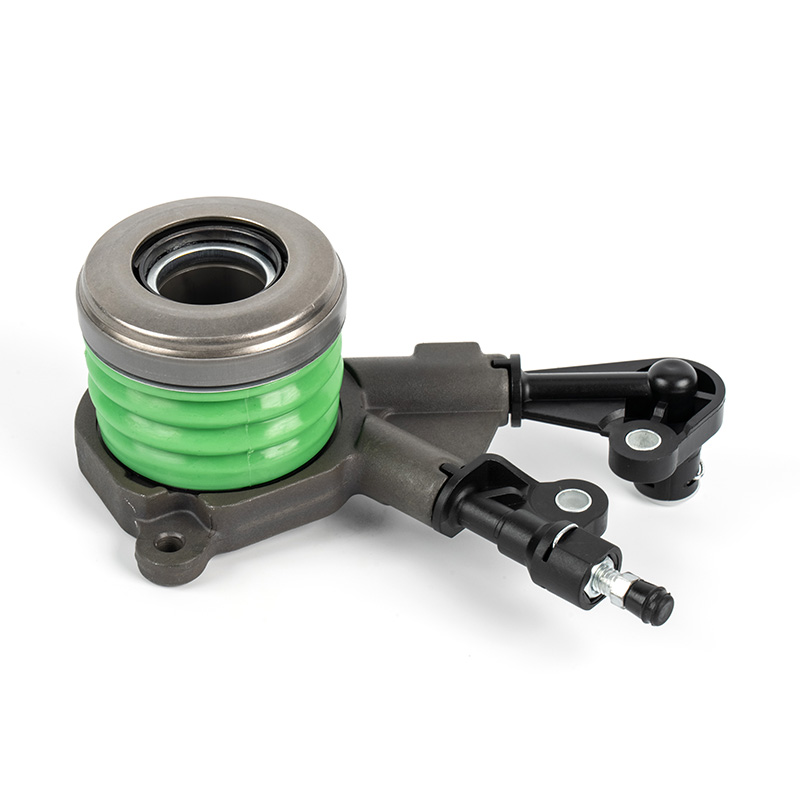
On vehicles with a concentric slave cylinder design, the release bearing is built directly into the hydraulic slave cylinder as a single unit. This combined assembly cannot be separated, so if either the bearing or the hydraulic seal fails, the entire unit must be replaced together. These integrated units are common on many front-wheel-drive platforms produced since the early 2000s and typically cost between 40 and 150 USD, depending on the vehicle.
Decision Framework: Replace, Inspect, or Leave It Alone
Whether to replace a clutch release bearing depends largely on the context of the work being performed. The following framework reflects common practice among independent transmission shops and clutch specialty suppliers.
- If you are already replacing the clutch disc and pressure plate as a kit, replace the release bearing at the same time without exception. Access cost has already been paid.
- If the bearing shows any roughness, grinding, or noise when spun by hand, replace it regardless of mileage, since a failing bearing can damage the pressure plate fingers if it seizes.
- If you are performing unrelated transmission work, such as a clutch slave cylinder repair, and the bearing happens to be accessible, replace it as a precaution if it has more than 50,000 miles of use.
- If the bearing was replaced recently, within the last 20,000 miles, and shows no symptoms, it is reasonable to leave it in place during unrelated repairs.
One scenario worth highlighting involves self-adjusting clutch (SAC) systems, common on many European vehicles. These systems use a diaphragm spring that maintains constant pressure on the release bearing throughout the bearing's life, which can accelerate wear if the bearing is not rated for the higher constant load. Always match replacement bearings to the specific clutch kit specification rather than assuming a generic part will fit, since SAC-compatible bearings often have different spring tension ratings than standard units.
Types of Clutch Release Bearings and How to Identify Yours
Ball Bearing Type (Push-Type Clutches)
This is the traditional design used on older vehicles with push-type clutches, where the clutch fork pushes the bearing toward the engine to release the clutch. The bearing rides on a sleeve or guide tube attached to the transmission input shaft housing and is held against the pressure plate fingers by spring tension from the clutch fork itself.
Self-Centering Bearing (Pull-Type Clutches)
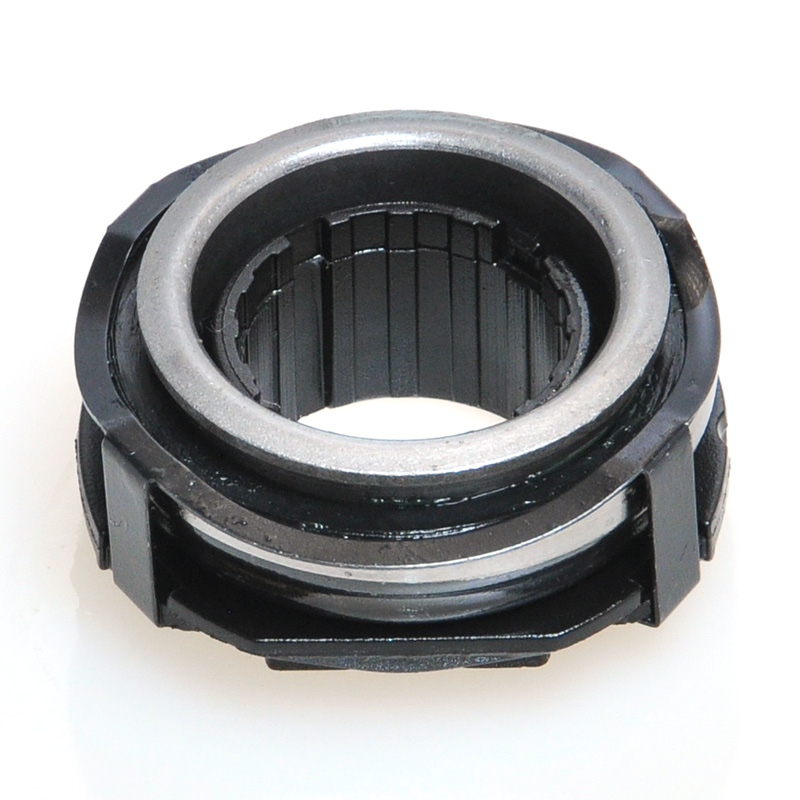
Found on many performance and European applications, pull-type clutches use a bearing that the fork pulls away from the engine to release the clutch. These bearings often include a self-centering feature with a wave spring that allows the bearing to align itself with the pressure plate during the first few engagement cycles, reducing vibration.
Concentric Slave Cylinder Bearing
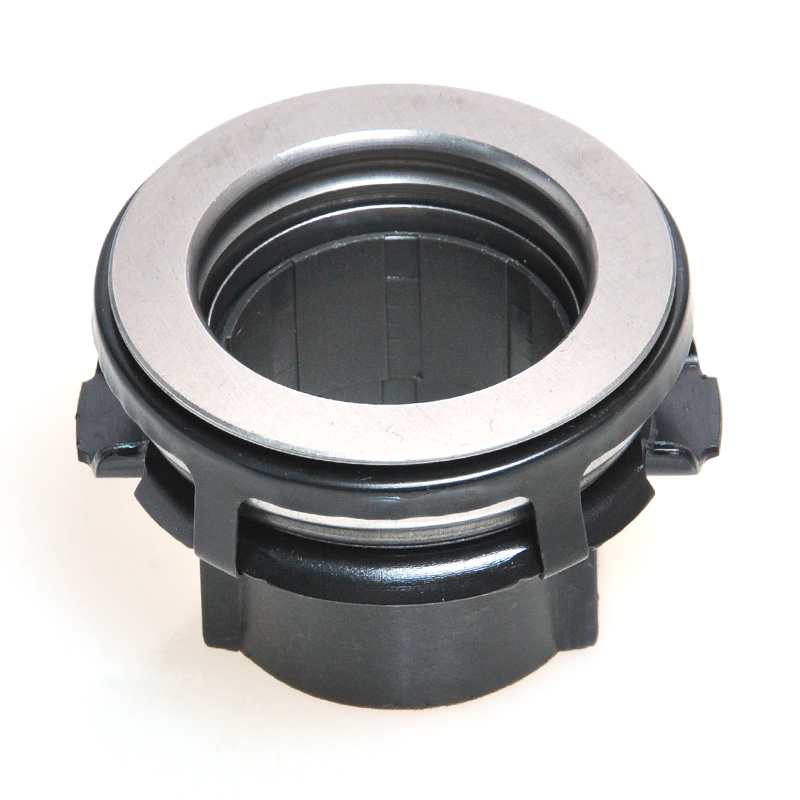
As described earlier, this design combines the hydraulic actuator and the release bearing into one sealed unit mounted directly on the transmission input shaft, inside the bell housing. It cannot be greased, rebuilt, or separated, and replacement requires bleeding the hydraulic clutch system afterward.
| Bearing Type | Common Application | Replacement Difficulty |
|---|---|---|
| Push-type ball bearing | Older domestic and Japanese trucks and cars | Moderate, slides onto guide tube |
| Self-centering pull-type | European sedans and performance cars | Moderate, requires correct centering during install |
| Concentric slave cylinder | Modern front-wheel-drive platforms | Higher, requires hydraulic bleeding |
Installation Tips That Prevent Premature Bearing Failure
A surprising number of release bearing failures within the first 5,000 to 10,000 miles after a clutch job trace back to installation errors rather than defective parts. Paying attention to a few details during installation significantly extends bearing life.
Apply Lubricant to the Correct Surfaces Only
The bearing's contact point with the pressure plate fingers or diaphragm spring should receive a thin layer of high-temperature grease, typically a moly-based or white lithium grease rated for at least 400 degrees Fahrenheit. The sealed bearing race itself should never be lubricated, since most release bearings are permanently sealed and adding grease to the bearing housing can attract dirt and accelerate seal failure. The guide tube or input shaft sleeve where the bearing slides should also receive a light coating of the same high-temperature grease to prevent the bearing from binding during travel.
Check Fork Pivot and Pivot Ball
The clutch fork pivot point, often a ball stud threaded into the bell housing, wears over time and can develop play that causes the release bearing to sit at an angle against the pressure plate. This uneven contact concentrates wear on one side of the bearing and is a common cause of bearings that fail noisily within a short time after replacement. Inspecting and, if necessary, replacing the pivot ball during a clutch job is inexpensive insurance, with most pivot balls costing under 10 USD.
Verify Free Play and Pedal Travel
After installation, the clutch pedal should have a small amount of free play before resistance is felt, typically 0.5 to 1 inch on cable and rod-actuated systems. Excessive free play can mean the release bearing is not making proper contact, while zero free play means the bearing is under constant light pressure even with the pedal up, a condition that dramatically shortens bearing life by keeping it spinning continuously.
Common Mistakes That Lead to Repeat Clutch Jobs
Shops that specialize in clutch and transmission repair frequently see the same handful of mistakes causing customers to return within a year of a clutch replacement. Avoiding these issues protects the investment made in the release bearing along with every other component in the kit.
- Reusing a worn or cracked clutch fork, which causes uneven loading on the new bearing
- Failing to resurface or replace a heat-damaged flywheel, which transfers vibration into the new bearing and disc
- Mixing components from different clutch kit brands, since spring rates and bearing travel distances are matched within a single kit design
- Not bleeding the hydraulic system fully after replacing a concentric slave cylinder bearing, leaving air in the line that causes partial bearing engagement
- Driving aggressively during the first 300 to 500 miles, often called the break-in period, before the new clutch disc and bearing have settled
One detail that is often overlooked involves the alignment tool used during clutch installation. If the alignment tool is removed before the transmission is fully seated against the engine, the input shaft can drop slightly out of alignment with the pilot bearing or bushing, putting side load on the release bearing the moment the clutch is first engaged. Keeping the alignment tool in place until the transmission bolts are snug prevents this issue entirely.
Cost Breakdown: Bearing Alone Versus Full Clutch Kit
Understanding the cost difference between buying a release bearing separately versus as part of a kit helps explain why most professionals recommend kit purchases for any clutch job.
| Component | Standalone Price (USD) | Included in Standard Kit |
|---|---|---|
| Clutch release bearing | 15 to 80 | Yes |
| Clutch disc and pressure plate | 100 to 400 | Yes |
| Pilot bearing or bushing | 5 to 25 | Often included |
| Alignment tool | 10 to 20 | Sometimes included |
Buying a complete kit that bundles the disc, pressure plate, release bearing, and pilot bearing typically costs between 120 and 450 USD for most passenger vehicles, representing a savings of 10 to 20 percent compared to sourcing each part individually, while also guaranteeing that all the friction and wear components are matched and fresh at the same time.
Final Recommendation
Replace the clutch release bearing whenever the transmission is already separated from the engine for clutch service, treat any noise or pedal feel changes as an immediate signal to inspect the bearing regardless of how recently the clutch was serviced, and always match the replacement bearing to the specific clutch kit and clutch type, whether push, pull, or concentric slave cylinder, rather than substituting a generic part. Following this approach keeps the release bearing from becoming the reason a clutch job has to be repeated within a year, which protects both the time and money already invested in the repair.
Related Products
Contact Us

A production enterprise specializing in the production of automobile clutch bearings and other non-standard bearings.
- Contact Information
-
 +86-575-86013311
 -
 +86-575-86013322
 -
 No. 50, Tashan 1st Road, Xinchang County, Shaoxing, Zhejiang, China

Copyrigh t© Xinchang Heyang Auto Parts Co., Ltd.. All Rights Reserved.
China auto bearing manufacturers wholesale auto bearing supplier
